Key takeaways
- Size to your real running load plus the surge from motors, pumps and AC — not just the nameplate sum.
- Qatar's heat derates output, so add margin in summer.
- Choose prime rating for continuous site use, standby only for backup.
- When unsure, send your load list and we'll size it for you for free.
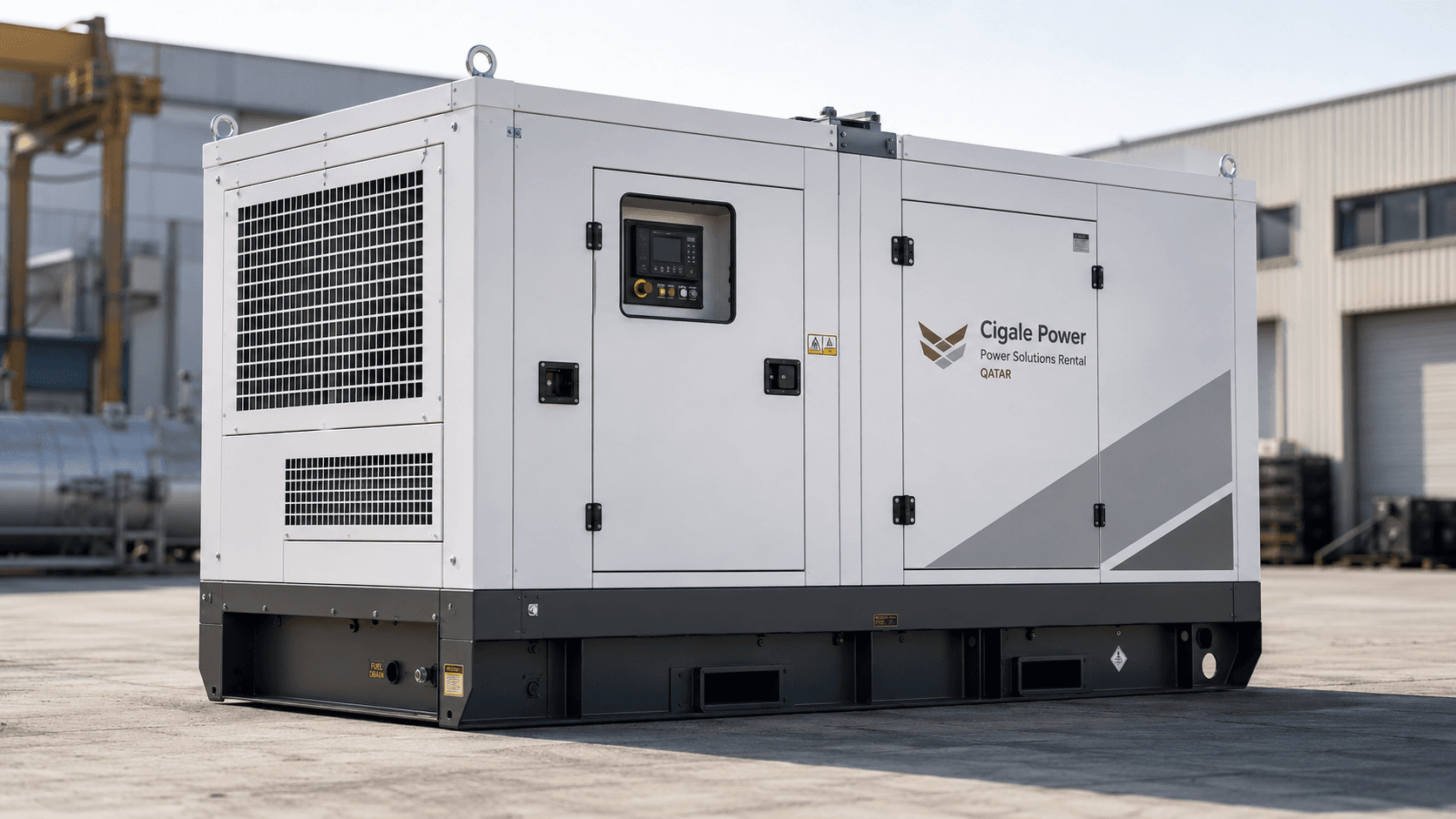
Choosing the right generator size is the single most important decision when you rent or buy. Pick a set that is too small and it will trip, overheat or shut down under load. Pick one that is far too large and you waste fuel and risk wet stacking. The goal is to match the generator to how you will actually use it.
Why correct generator sizing matters in Qatar
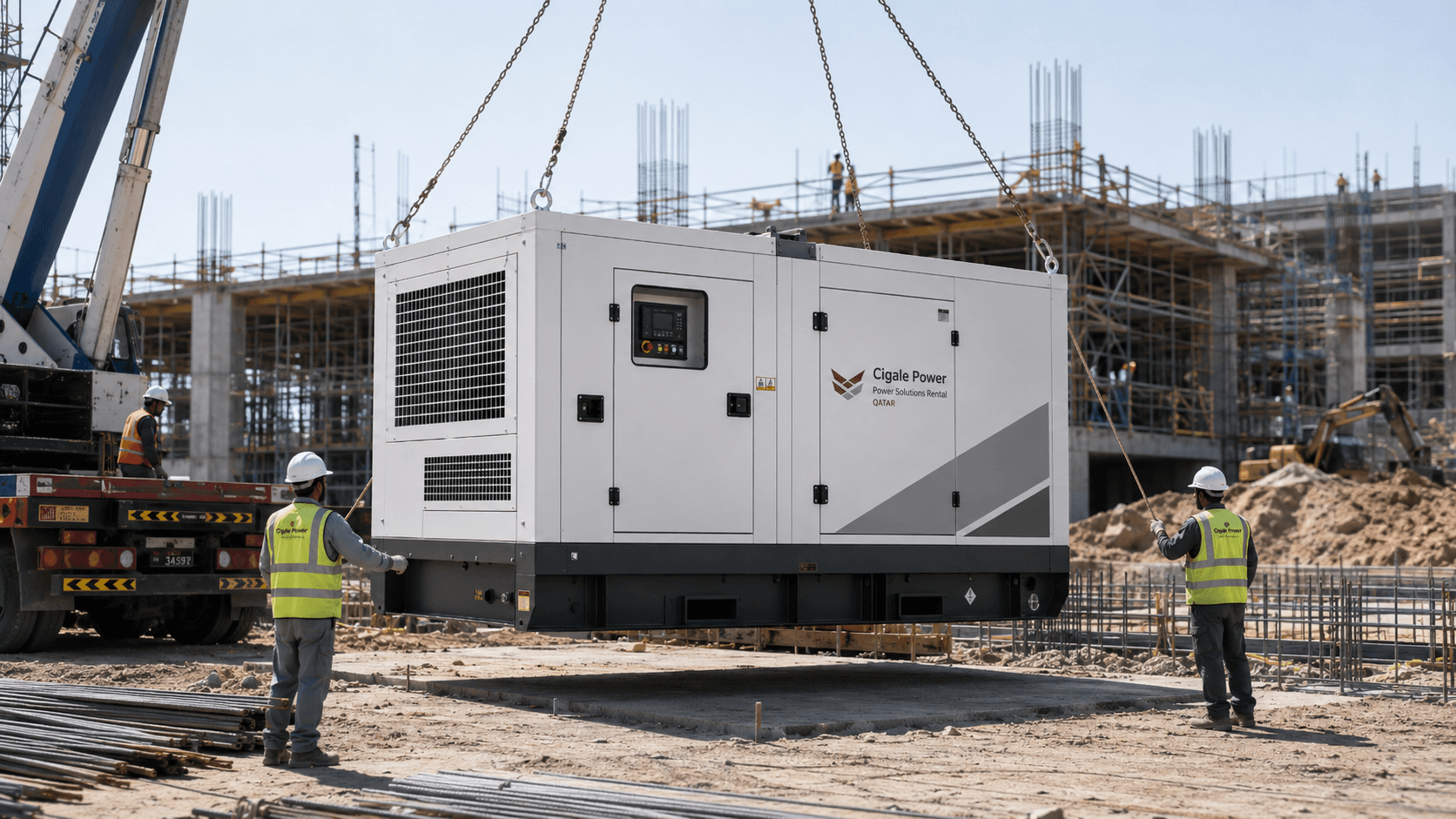
Qatar's climate makes sizing more demanding than in cooler countries. High ambient temperatures reduce a generator's usable output (derating), and dusty, continuous-duty sites push cooling systems hard. A generator that looks big enough on paper can fall short on a 48°C afternoon. Getting the kVA right from the start avoids downtime, fuel waste and emergency call-outs.
Step 1 — Add up your total running load
List every load the generator must supply and note its running power. Lighting, tools, site offices, pumps, air conditioning, hoists and cranes all add up. Convert everything to kW (or kVA) so you have one clear total.
- Note running watts/kW for each device.
- Separate continuous loads (lighting, AC) from intermittent ones.
- Confirm voltage and phases — single-phase or three-phase (50 Hz in Qatar).
Step 2 — Allow for starting (surge) loads
Motors, pumps, compressors and air conditioning draw a large inrush current when they start — often two to three times their running current. The generator must handle that momentary peak without the voltage collapsing. This is why a generator is usually sized above the simple sum of running loads.
A common mistake is sizing only to running kW. Always check the biggest motor's starting load — it often sets the minimum generator size.
Step 3 — Derate for Qatar's heat and site conditions
Manufacturers rate generators at standard conditions. In Qatar's summer heat and at dusty, enclosed or high-altitude sites, usable output drops. Build in headroom — typically 10–20% — so the set performs in real conditions, not just on the datasheet.
Step 4 — Match the rating to the duty (prime vs standby)
- Prime rating: variable load for unlimited hours — the right choice for construction and off-grid sites.
- Standby rating: maximum power for short outages only — not for continuous running.
- Continuous rating: a constant base load for unlimited hours.
A quick rule of thumb
As a starting point, total your running load, add the largest motor's starting demand, then add 20–25% headroom for heat and growth. That gives a sensible minimum kVA. It is only a guide — for anything critical, have the load assessed properly.
Let us size it for you
Send us a list of what you need to power, the site location and how long you need it. Our team will recommend the right kVA and the cables, fuel tank and distribution to go with it — across the whole range from small 5 kVA units up to multi-megawatt synchronised sets.
Frequently asked questions
It depends on your tools, hoists, site office and AC, and the starting load of any motors. Many small sites run on 30–100 kVA, but the only reliable way is to total your loads and add margin for starting and heat. Send us your load list and we'll confirm the size.
A little headroom is good, but heavily oversizing wastes fuel and can cause wet stacking from chronic light loading. The right approach is correct sizing with sensible margin — not the biggest set you can find.
Need help with this on your site?
Our team can size, supply, deliver and maintain the right power solution for your project anywhere in Qatar — 24/7.